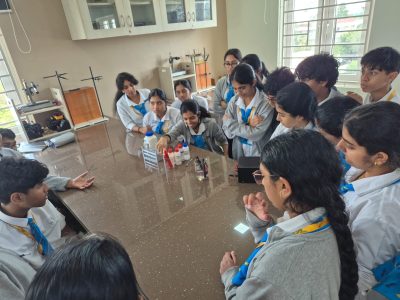

As part of their Chemistry learning at CPS GS, ANN, students recently took part in an engaging practical activity titled “Turning Salt into Valuable Chemicals.”
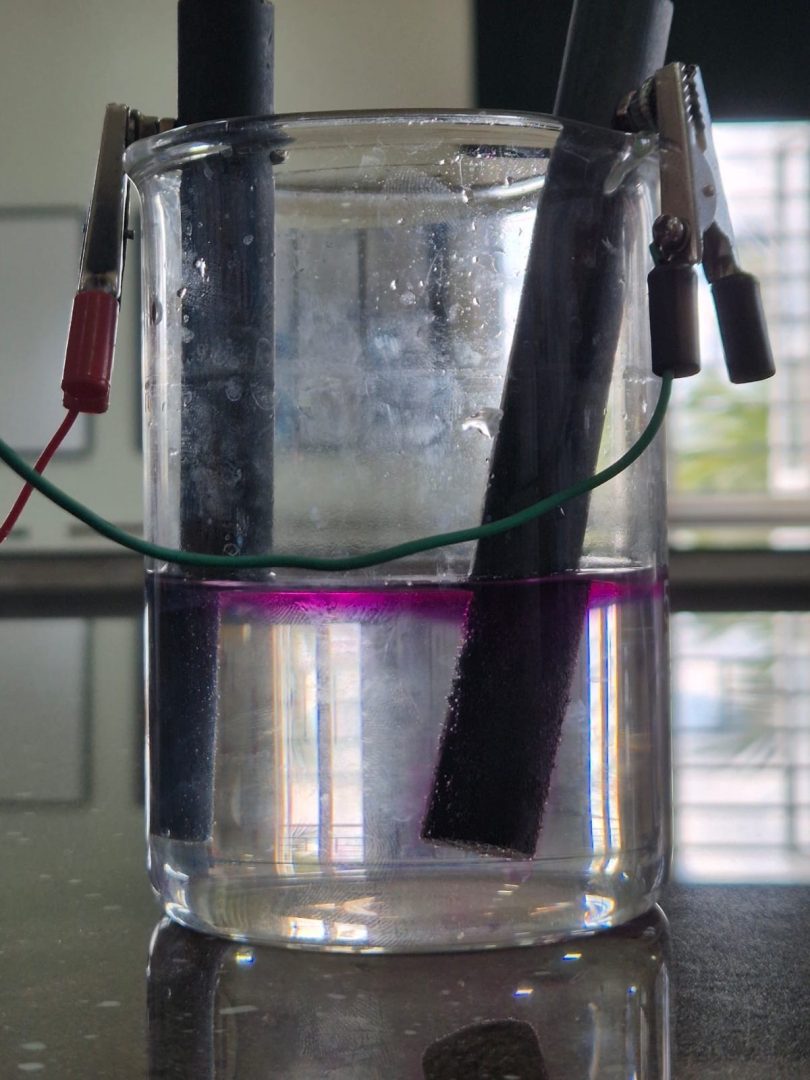
During this hands-on session, students explored the process of electrolysis by passing electricity through a salt solution (brine). They observed how electrical energy can bring about chemical changes and learned how this process is used in real-life industries through the chlor-alkali process. Students discovered that when salt dissolves in water, it separates into charged particles called ions. By applying an electric current, they saw how different substances are formed, including hydrogen and chlorine gases, and how the remaining solution becomes alkaline due to the formation of sodium hydroxide (NaOH).
They also learned about the practical importance of sodium hydroxide, which is widely used in making everyday products such as soaps, detergents, and cleaning agents. To confirm their results, students used an indicator called phenolphthalein, which turned pink and helped them identify that the solution was basic. This activity helped students connect classroom theory with real-world applications, strengthening their understanding of chemical reactions, industrial processes, and scientific observation skills.