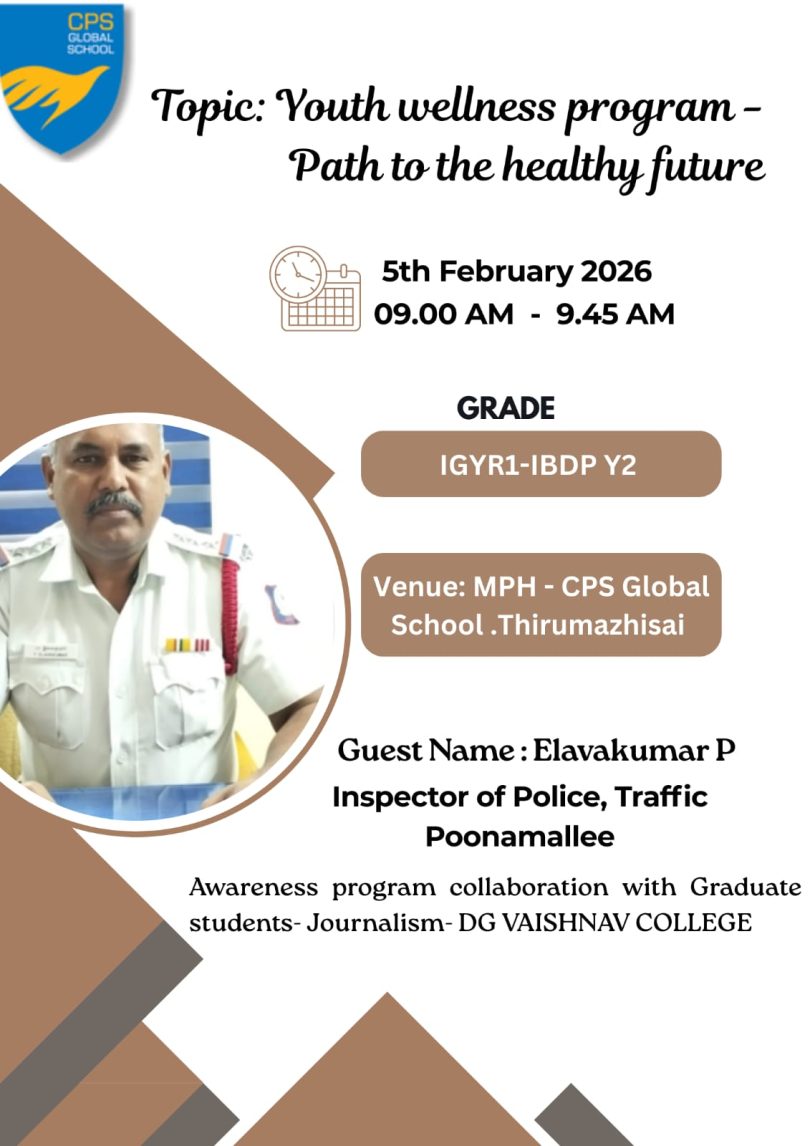

Navigating the Crisis – Youth Wellness Program
Students from IG-1, IG-2, IBDP 1, and IBDP 2 participated in an insightful youth wellness program titled “Path to a Healthy Future.” The event focused on raising awareness about the importance of leading an addiction-free life. Our school collaborated with Mr. Renesh and his team from DG Vaishnav College, who are currently pursuing their degrees in Journalism. The program was further enriched by our honorary guest speaker, Mr. Elavakumar P, Inspector of Police (Traffic), Poonamallee, who shared his valuable insights and experiences on managing modern-day addictions and behavioural challenges among youth.
What Does It Really Mean to Be “Addiction-Free”?
The session emphasized SDG 3 – Good Health and Well-being, which highlights the importance of preventing substance abuse and promoting healthier living habits. However, being “addiction-free” extends far beyond abstaining from drugs or alcohol—it also includes recognising our dependence on everyday habits we often overlook. Take a moment to think—when was the last time you went an hour without checking your phone, scrolling through social media, or reading a message notification? The irony is that while technology connects us, it also traps us. According to the Cambridge Dictionary, addiction is defined as “being unable to stop taking drugs or doing something as a habit.” If we can’t resist checking our screens the moment we wake up, doesn’t that count as a habit too? While technology itself isn’t harmful—after all, our studies and communication rely on it—excessive use can quietly turn into a digital dependency. We get lost in the endless stream of short-form content and instant gratification, often sacrificing our sleep, focus, and peace of mind. And that’s the thing about addiction—it’s not limited to substances. It’s anything we overconsume to the point where it begins to control us. Much like water oversaturated with sugar, too much of anything can harm us mentally and physically.
Taking a New Leap
Whether it’s phone addiction, substance use, or even overindulgence in something seemingly positive—like reading or gaming—balance is key. Here are a few ways to begin your journey toward mindful living:
- Track Your Habits
Start journaling or planning your day to consciously reduce time spent on addictive activities. Awareness is the first step to change. At first, it may feel uncomfortable, but remember—real growth is gradual and requires consistency. Ask yourself: Will what I’m doing now truly benefit me? Or am I being drawn into a habit loop?
- Confide in Someone You Trust
Don’t hesitate to open up to family, friends, or mentors. Sharing your struggles or goals can make the process less daunting. Seeking guidance doesn’t mean you’re weak—it means you’re strong enough to want to improve. Sometimes, a small conversation can spark big change.
- Explore New Interests
Replace harmful habits with meaningful ones. Try a new hobby, volunteer, go for a walk, or learn something creative. Doing activities that engage your mind helps restore balance and build a sense of satisfaction that no quick-fix habit can replace.
Closing Thoughts
Addictions may vary, but the core message remains the same: awareness, balance, and action are the foundations of well-being. Programs like “Path to a Healthy Future” remind us that wellness isn’t just about avoiding harm—it’s about consciously choosing what nurtures our minds and bodies every day.