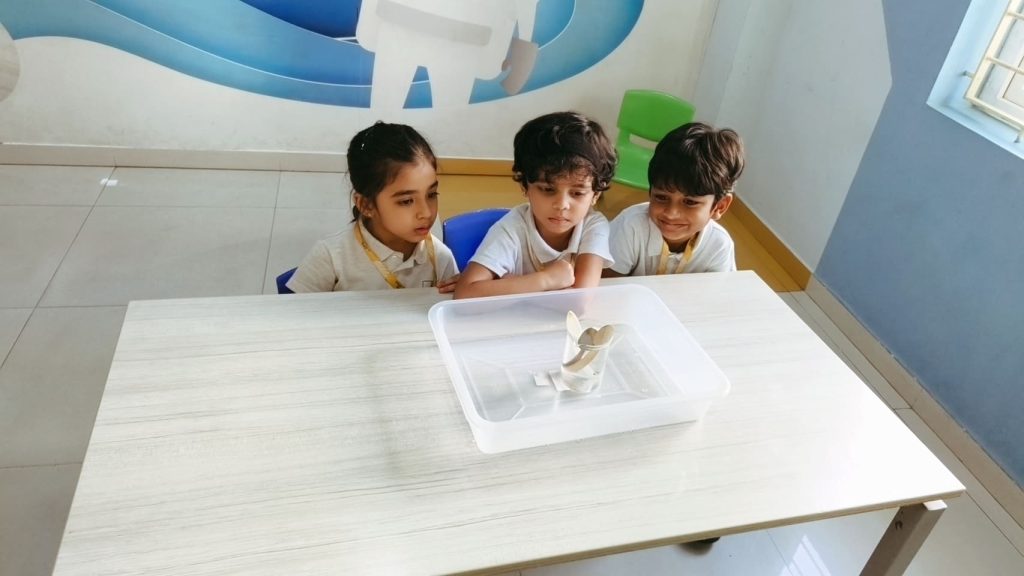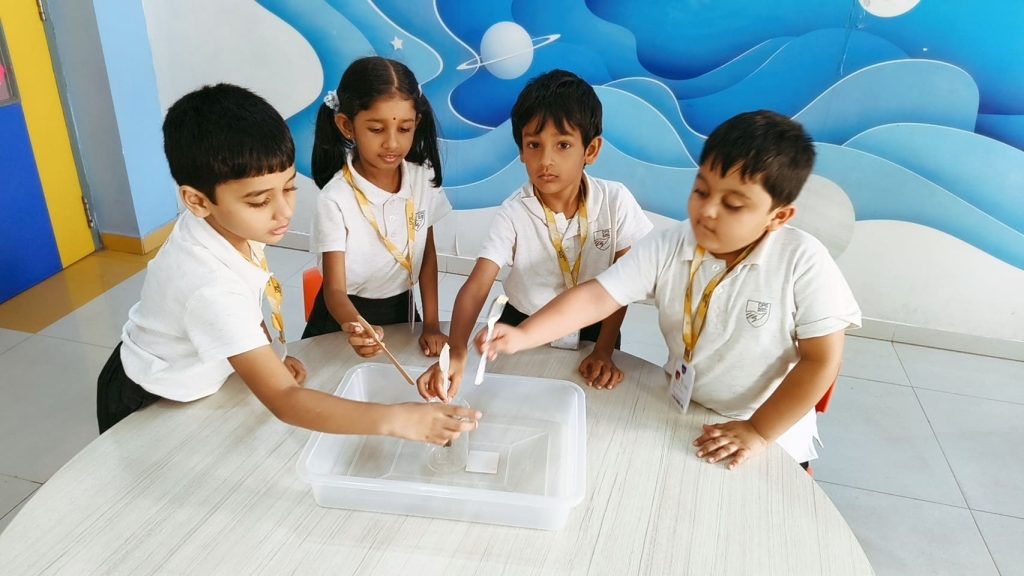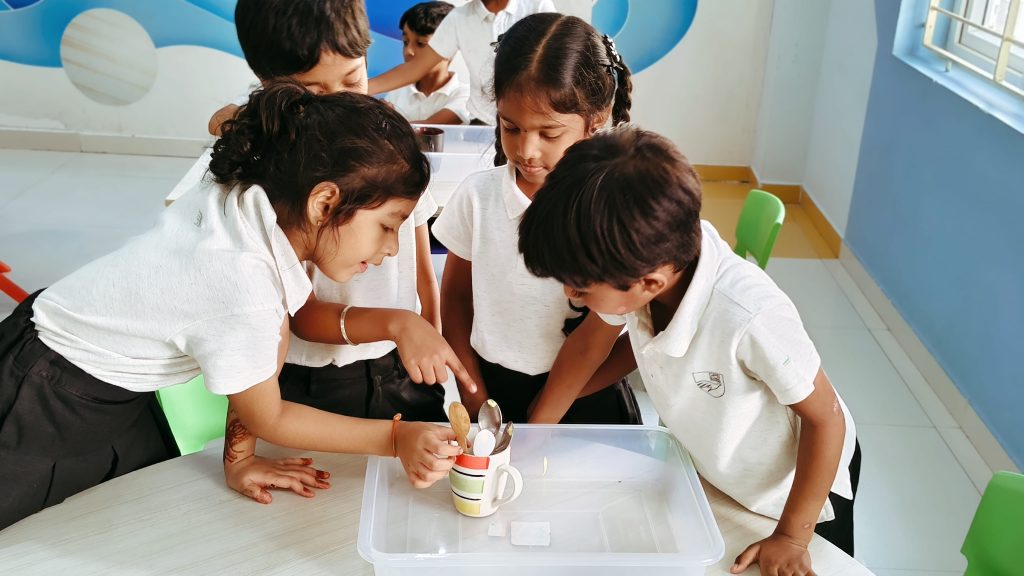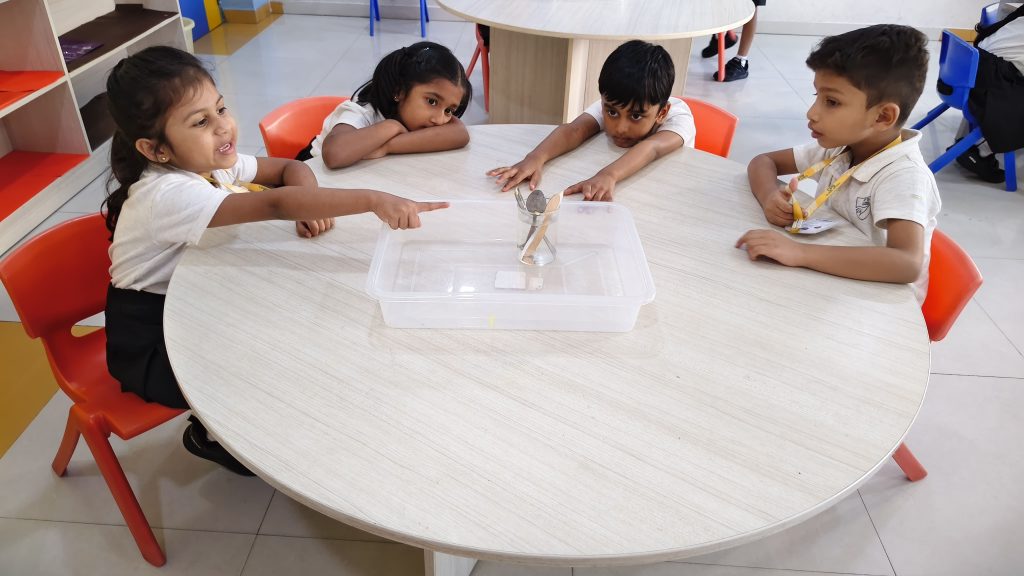
What happens when butter meets heat? Does it melt at the same speed on every spoon? Or does the material make a difference?
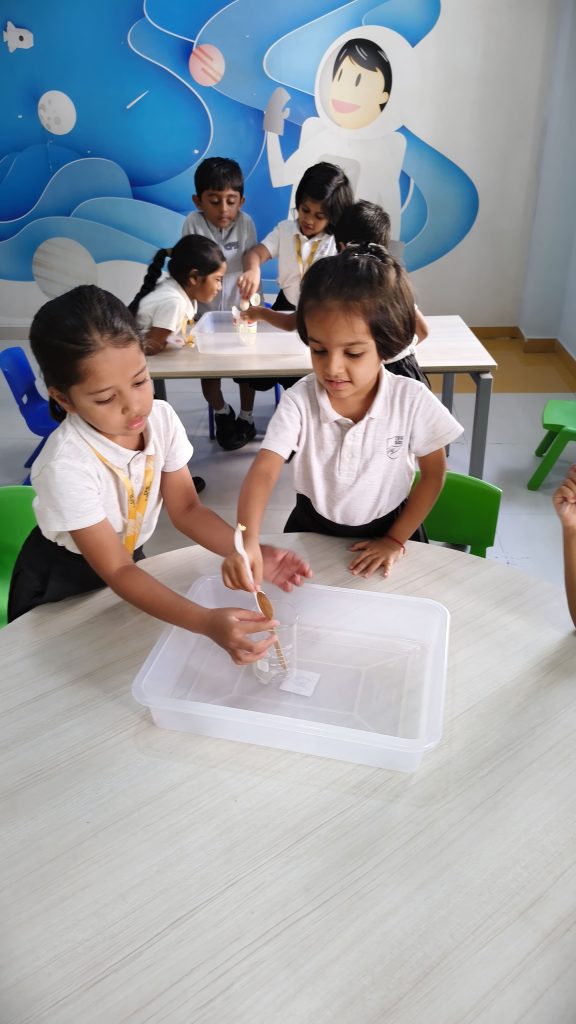
Our little scientists were ready to investigate! As part of our exploration of Heat and Materials, the children conducted an exciting experiment to discover how different materials respond to heat.
Let’s Make a Prediction!
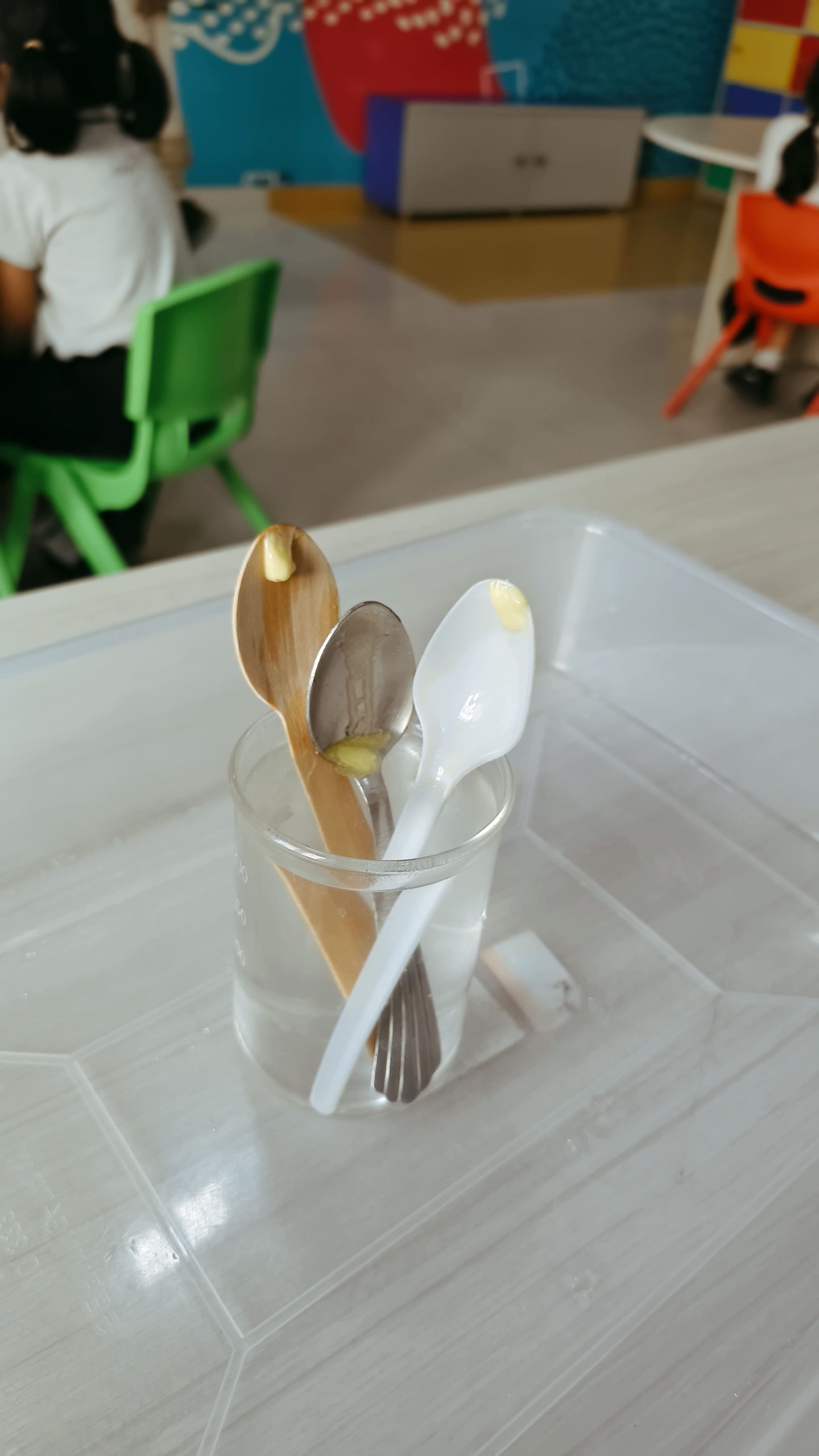
Three spoons – one wooden, one metal, and one plastic – were placed side by side. A small piece of butter was placed on each spoon, and the children eagerly shared their predictions.
Which spoon do you think will melt the butter first?
- Will the metal spoon win the race?
- Will the wooden spoon keep the butter firm?
- Will the plastic spoon surprise us?
The predictions were in, and it was time to investigate!
Let the Experiment Begin!
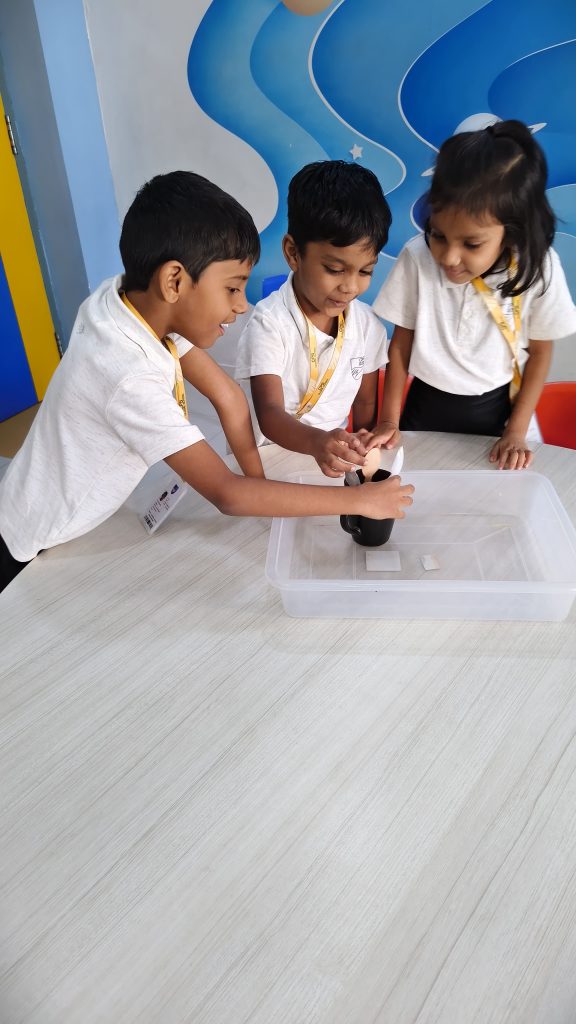
With the help of their teachers, the children placed all three spoons together in a cup of hot water, with a small piece of butter on each spoon.
Eyes wide open, they watched the butter closely as heat travelled through the spoons.
Which piece started melting first?
Which one remained firm for longer?
Were their predictions right?
The metal spoon took the lead! The butter on it melted faster, while the butter on the wooden and plastic spoons took longer to melt.
The Science Behind the Surprise!
The children discovered a fascinating scientific concept – HEAT CONDUCTION! The hot water warmed all three spoons, but each material transferred heat differently.
Our little experiment doesn’t end here! Let’s put on our thinking caps and explore a little further.
Why are cooking vessels usually made of metal? Why do many cooking utensils have wooden or plastic handles?
The activity was more than just watching butter melt. It was about predicting, observing, comparing, questioning, and making connections with the world around us.